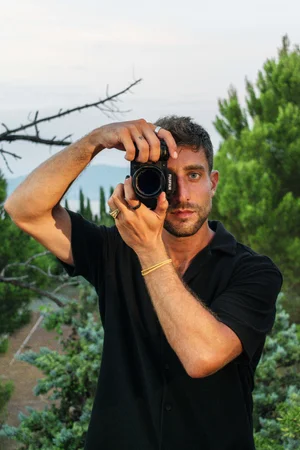
a hundred days at torre moresca
A summer as a resort photographer in Sardinia: the rhythm of a season, the craft of photographing strangers, and what three months in one place teach a photographer who is used to moving.
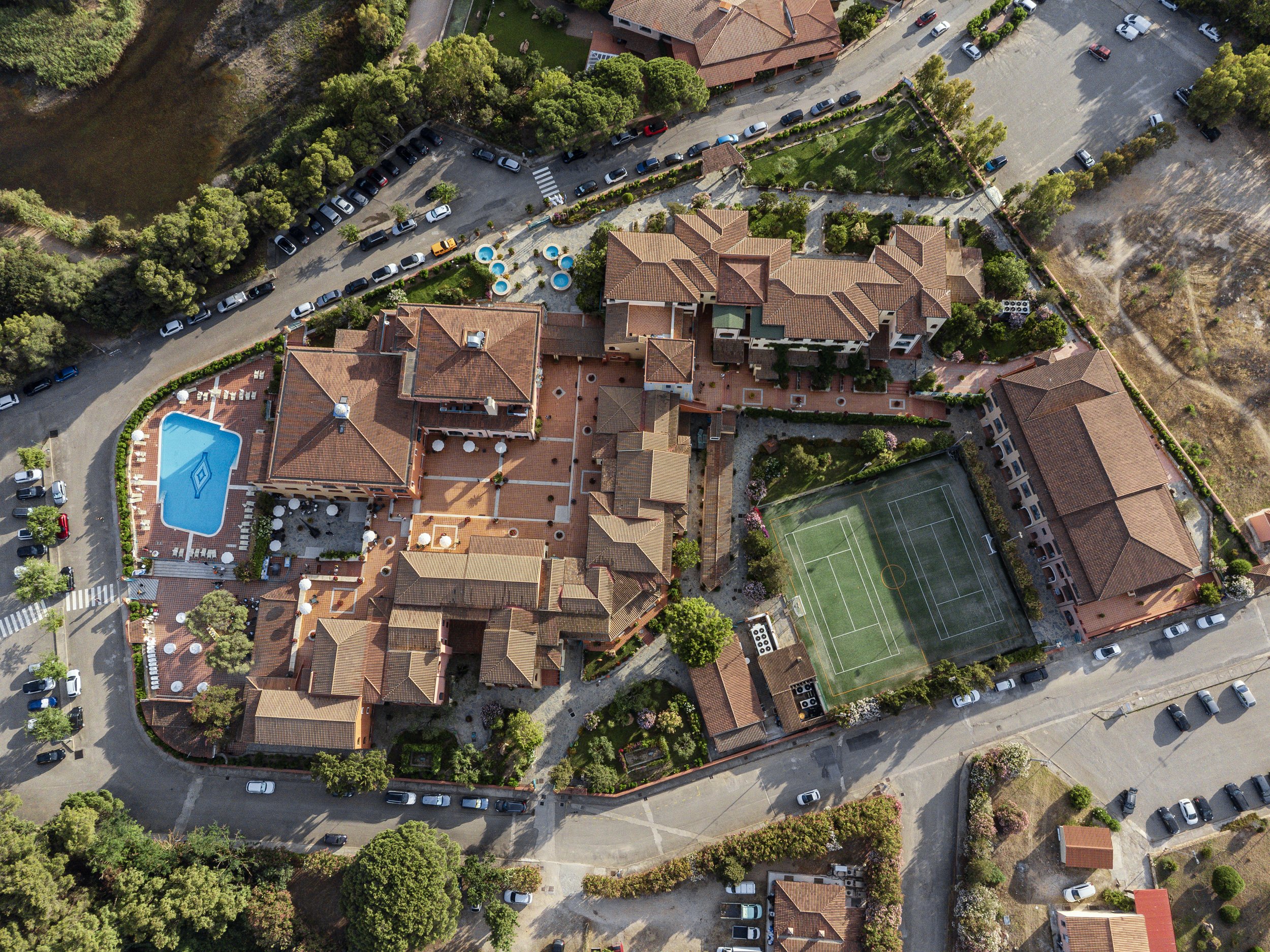
I arrived at Club Hotel Torre Moresca on the 6th of June and left on the 13th of September. A hundred days, exactly. I went as the photography manager, one of those jobs you describe in one line and then spend three months finding out what the line actually meant.
This is not a story about a hotel. It's a story about a season: the shape it gives to your days, the things it takes from you, and the few it gives back.
The shape of a day
A season is a timetable before it is anything else. Mine went like this.
At ten I was on the beach, photographing guests in the water and on the sand, until midday. Lunch at half past twelve. From half past one to half past two I was at the desk, building each family's folder and selling them their photographs. Then back to the house to rest until four. From four to six, the beach again. Dinner at eight. From nine until eleven, sometimes half past, the desk again, selling the day.
Written down it looks like an office job with a sea view. Lived, it is something else: two shifts of light, two shifts of selling, and a long white hole in the middle of the afternoon when the sun is too hard for anyone to want their picture taken.
After a few weeks the timetable stops being a schedule and becomes a climate. You don't check it. You live inside it.
Photographing strangers, twice a day
Most of my work, before and after this summer, happens slowly. A conversation first, then a plan, then a location I've scouted, often days in advance. A resort beach is the opposite. The subject is a family you met four seconds ago, the light is whatever the hour gives you, and the direction is a sentence or two, in whatever language the family speaks.
I spoke all five I needed: Italian, English, Spanish, Russian, Portuguese. Some of the best moments of the summer were the conversations that happened around the photographs, with families who were curious, sharp and good company. You can't fake that part. A family that has laughed with you for ten minutes on the sand in the morning arrives at the desk in the evening as someone you know, and gives you a different picture than a family that has been told where to stand — both in the moment and, later, in the frames they choose to buy.
That was the discovery: rapport built at ten o'clock decides what sells at nine.
The desk
The part nobody imagines is the desk. A resort photographer is paid for the photographs people buy, not the ones he takes. So twice a day, after lunch and after dinner, I sat with families and went through their pictures with them.
It taught me something I didn't learn in ten years of choosing my own clients: a photograph has to survive the moment someone looks at it and decides whether it's worth keeping. The frames that sold were the ones where people recognised themselves at their best. Sometimes those were the same frame I was proudest of. Often they weren't.
And a second lesson, quieter but more useful: variety beats volume. A folder with thirty near-identical frames sells fewer prints than a folder with ten distinct moments. Guests can't perceive value in variations they can't distinguish. Editing before the viewing turned out to matter as much as shooting the viewing.
Leading a team
I went as the photography manager, with three photographers working with me over the season. Managing people in a place where you also live with them, share a kitchen with them and see them at breakfast is its own education. Not everyone arrives with the same standards, and not everyone wants to be managed.
One colleague was the real thing: precise, reliable, a good eye. She was moved to another post after a month, and I missed her for the rest of the summer, as a photographer and as company on the long afternoons.
If the season taught me one thing about leadership, it's that you can share a timetable with people without sharing a way of working, and that the second can't be ordered, only found.
The house, the rooster and signora Rimedia
I lived in a house near the resort. It belonged to signora Rimedia, seventy-six, who would bring me fresh fruit and cakes she had baked herself. There were cats outside the door. There were hens, and there was a rooster, who woke me at five in the morning almost every day of the summer. By July I had stopped setting an alarm.
It's the kind of detail that doesn't make it into a portfolio and ends up being what you remember first.
Days off
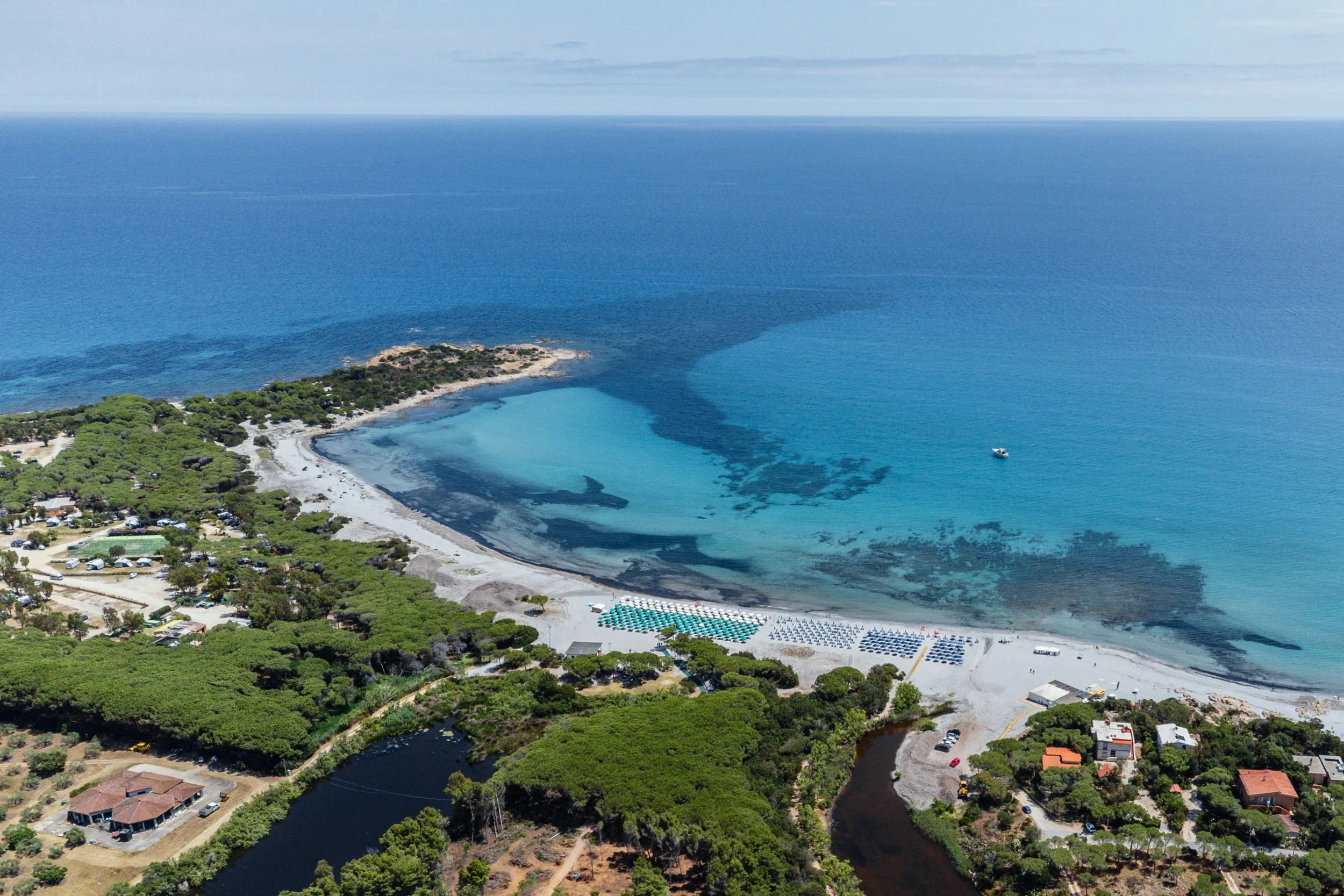
I had no car, so on days off the world was as big as my feet made it. In the morning I trained, calisthenics at the house. After lunch I walked to a beach nearby and stayed there until seven: music, a book, conversations with whoever was there, and with my good colleague while she was still around.
The lifeguard became a friend. We talked about technology and video games, the kind of conversation that has nothing to do with work and is exactly why it helps.
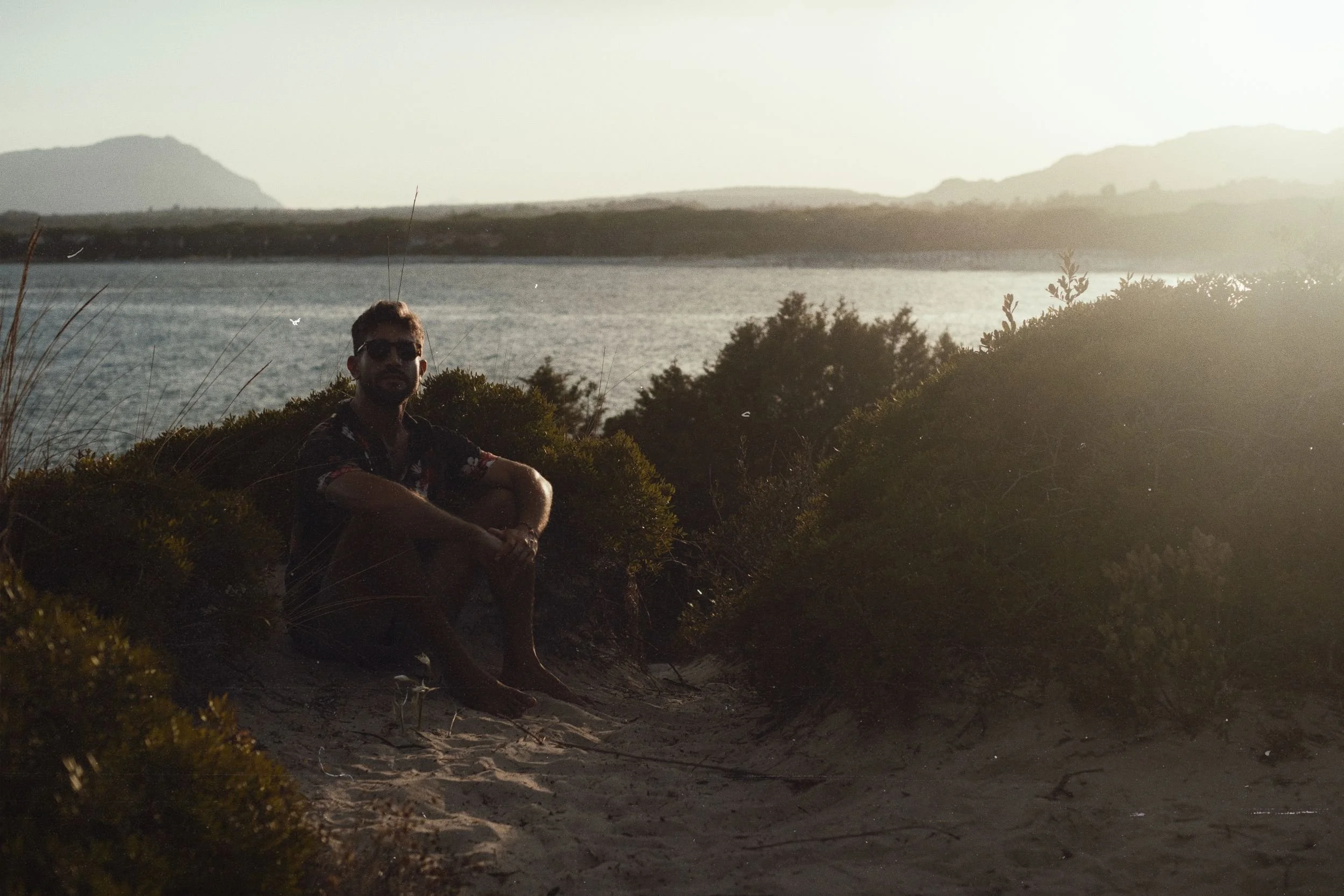
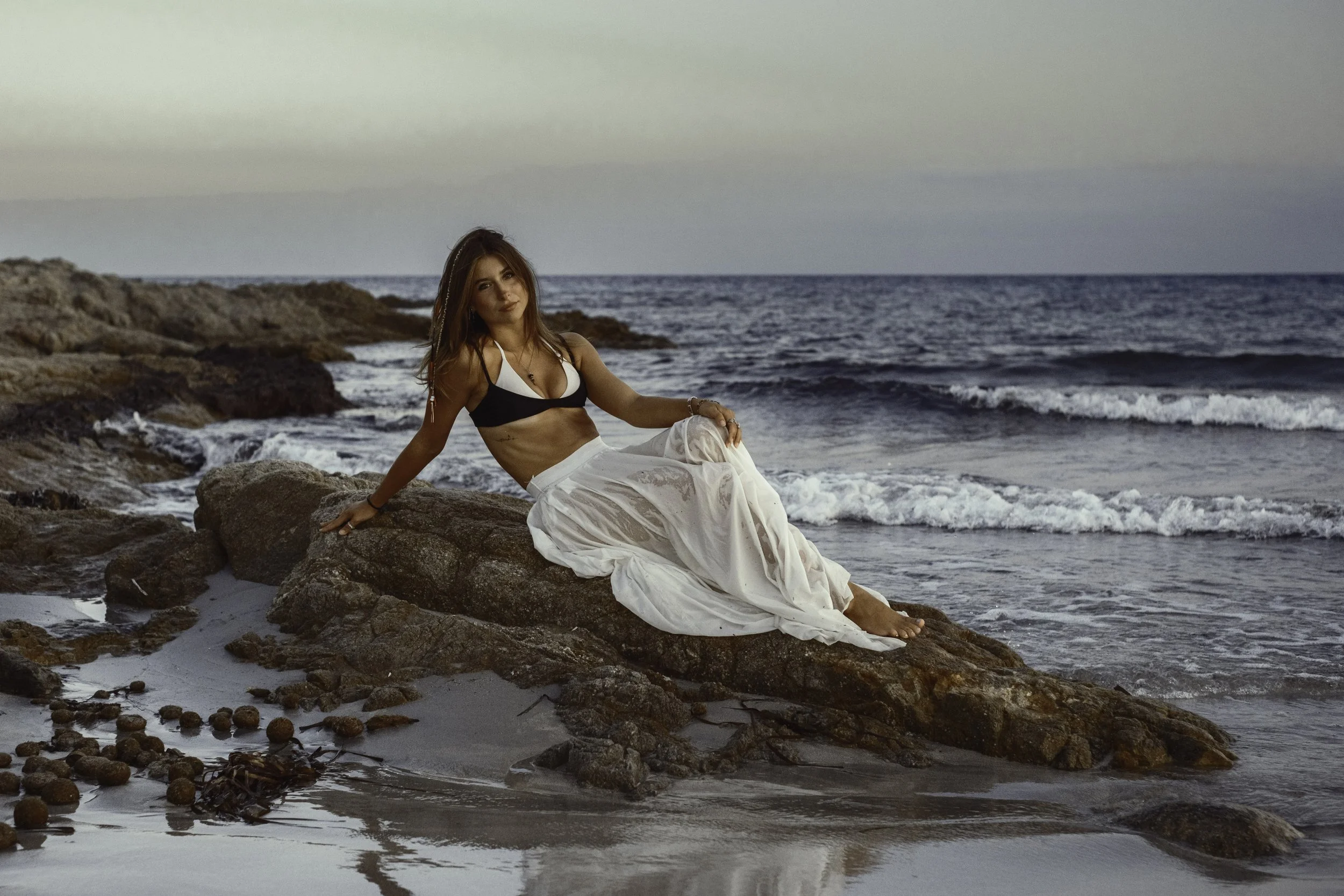
And there was the light. At sunset, on the peninsula near the house, the pines caught the last hour in a way I still think about — a warm gold that flattened the sea into a plate and made the branches look like they had been drawn by hand. One evening I shot a series there with a friend from the animation team: a portrait sequence, part warrior, part mythic, part quiet. It was the only shoot of the whole summer that was mine alone, and it reminded me why I do this in the first place.
What I take with me
The people, first of all. I enjoyed the company of the rest of the staff more than I expected to. A resort in high season is a small village with its own weather, and the people who keep it running are the best part of it.
Then the craft. Photographing strangers well — with a few seconds of eye contact and a sentence in whichever language they answer in, then editing what you shoot before anyone else sees it — is a skill I'd underestimated. It changes how I'll shoot every future session and every future trip: less precious, more efficient, quicker to see the frame that will matter to the subject rather than only the frame that matters to me.
And a clear answer to a question I didn't know I was asking. Three months in one place, running a small operation and photographing under commercial conditions, are enough to know that I still want to be moving, still want to be choosing the work. By the end of the summer I was ready to leave, and ready for whatever came next.
On the 13th of September I left. The rooster, presumably, did not notice.